
Two Origins.Your Choice.
From deep within the earth or from the laboratory – both are real diamonds. Discover which one suits you.
Two paths to the same crystal
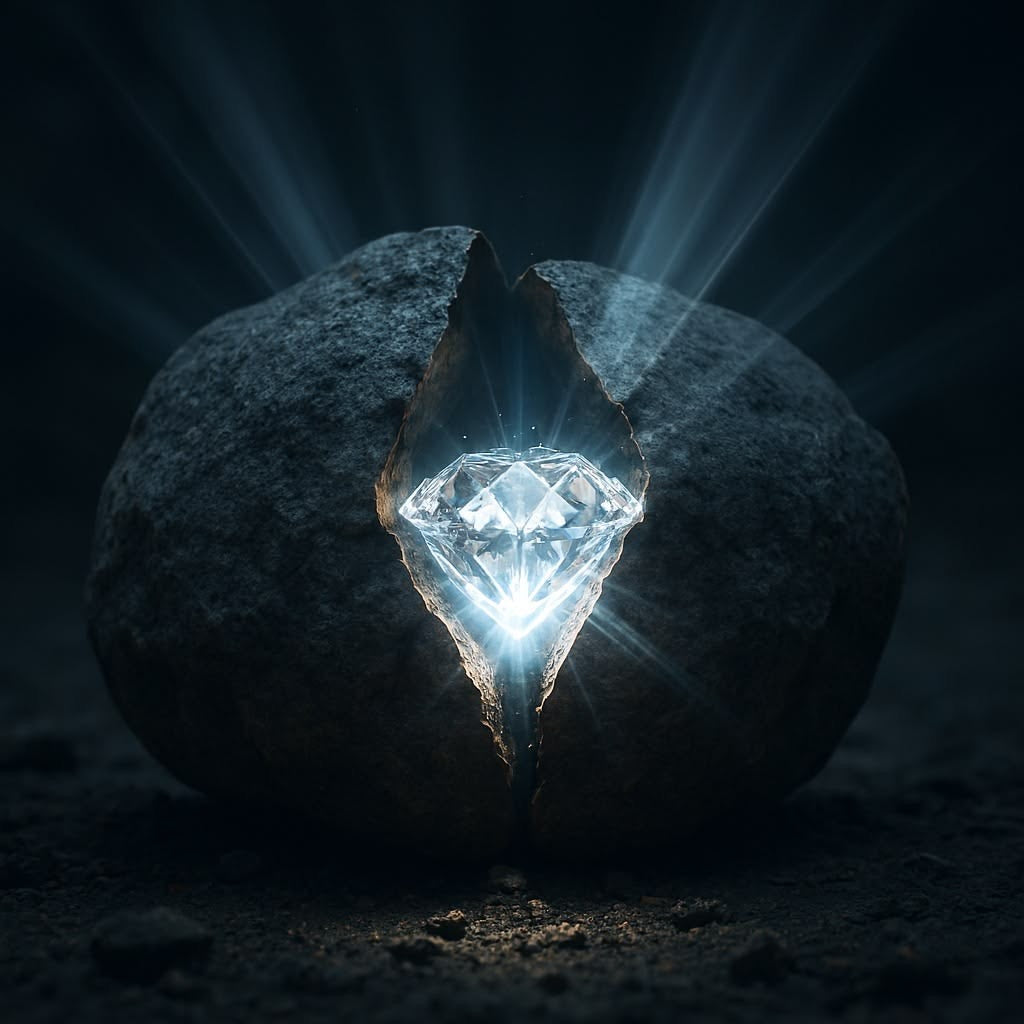
Grown deep within the earth
Most natural diamonds formed 150 to 200 kilometres deep in the earth’s mantle. Their age is not the time they took to grow: many grew over thousands to perhaps millions of years and then rested in the depths for a long time.
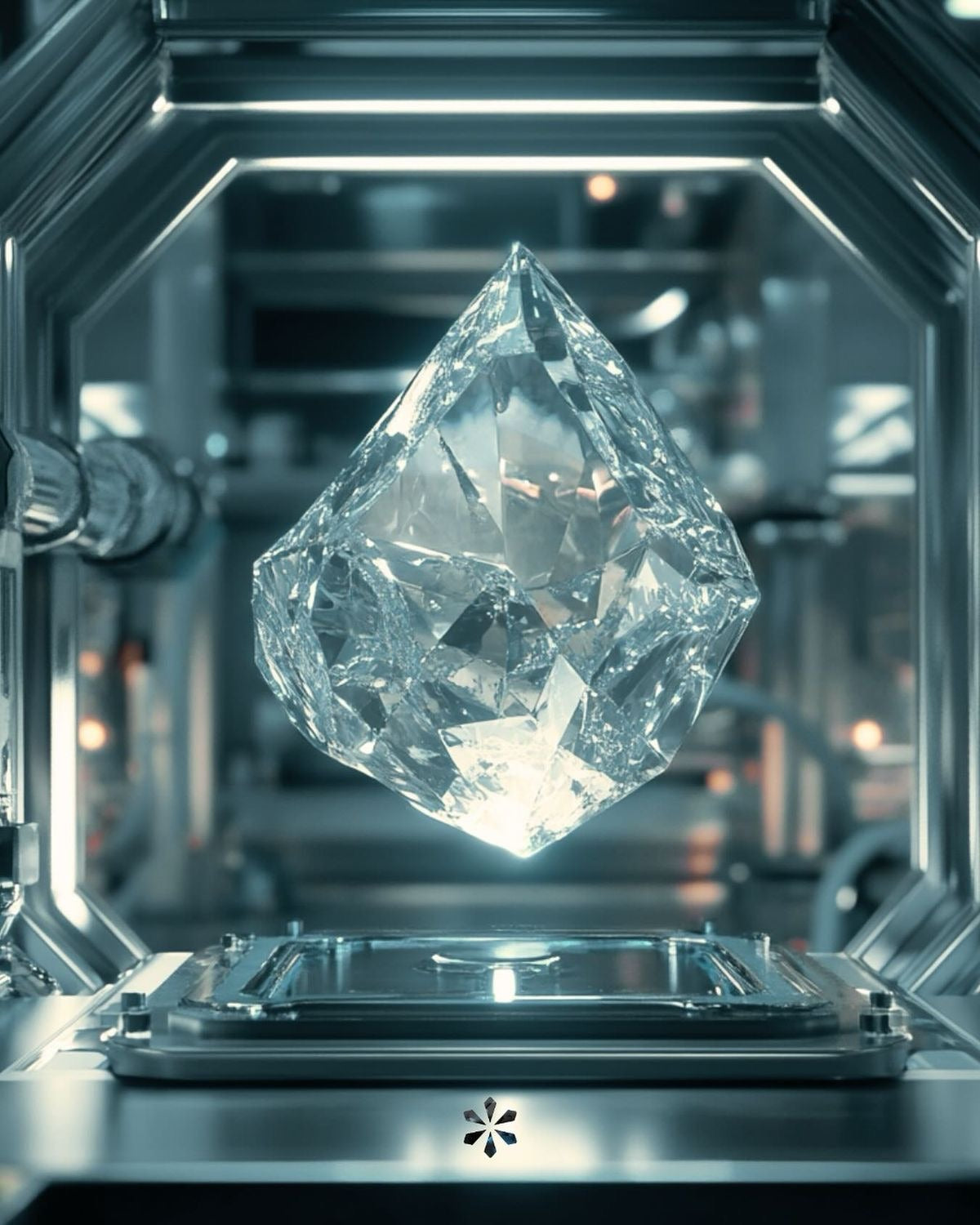
Grown with precision
Lab-grown diamonds grow on a diamond seed – under high pressure and high temperature (HPHT) or from a carbon-rich gas (CVD). Not an imitation, but diamond: the same chemistry, the same structure, the same light.
From carbon to crystal
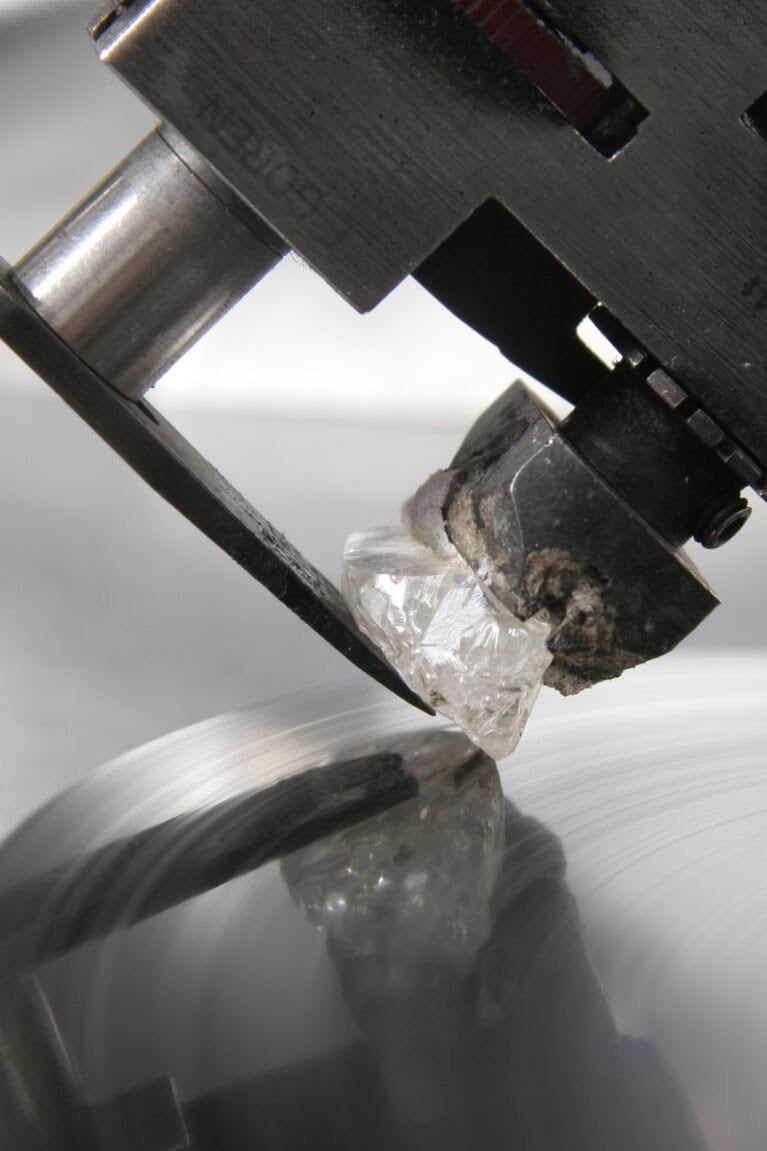
From rough stone to brilliant
Whether grown in the earth or in the laboratory, every rough diamond is cut and polished with the same craftsmanship.
It is proportions, symmetry and polish that decide how much light a stone returns – its origin plays no part in this.
What is the same. What sets them apart.
| [Feature] | [Natural] | [Lab-Grown] |
|---|---|---|
| Origin | Earth’s mantle, usually 150–200 km deep. Age around 90 million to 3.5 billion years. | Growth chamber: HPHT in days to weeks, CVD in about three to four weeks. |
| Composition | Crystalline carbon with an identical crystal structure. | |
| Hardness | 10 on the Mohs scale – diamond is the hardest known mineral. | |
| Cut | The same cuts and the same craftsmanship. | |
| Colour | Traces of nitrogen can create a delicate yellow tint. | Colourless stones are usually nitrogen-free; CVD crystals are often decolourised after growth. |
| Clarity | Natural inclusions, such as tiny mineral crystals – traces of their formation. | HPHT: possible metallic flux inclusions. CVD: rather dark graphite inclusions. |
| Grading report | GIA: classic grades, such as colour D–Z and clarity from FL to I. | GIA since October 2025 (colourless to near-colourless): “Premium” or “Standard”. Other laboratories: partly their own systems. |
| Price | Rarity and natural origin shape the price. | Usually considerably more affordable for comparable quality; the difference varies by stone and market. |
What they have in common
Both are chemically, physically and optically diamond and cannot be told apart with the naked eye. Their quality is determined by the same characteristics: cut, colour, clarity and carat weight.
How these characteristics are named is up to each laboratory – at GIA, for example, classic 4C grades for natural diamonds and, since October 2025, “Premium” or “Standard” for colourless to near-colourless laboratory-grown diamonds.
How the origin is determined
Gemmological laboratories use spectroscopy and special imaging to examine the traces of a stone’s growth history – such as patterns typical of HPHT or CVD.
GIA laser-inscribes laboratory-grown diamonds on the girdle with “Laboratory-Grown” and the number of its grading report.
Not to be confused: moissanite
Moissanite is silicon carbide – a material in its own right that visually resembles diamond. It is doubly refractive, shows a stronger play of colour and is slightly less hard. Lab-grown diamonds, by contrast, are pure crystalline carbon: diamond.
Two paths. One standard.
Natural Diamonds
- A piece of the earth’s historyMany are hundreds of millions to billions of years old – older than almost anything you can touch.
- Rare by natureGem quality only forms under rare geological conditions, and every deposit is finite.
- Traces of formationNatural features within tell the individual story of each stone.
Lab-Grown Diamonds
- More diamond for your budgetThe same budget often allows for larger stones or higher quality.
- Freedom in designSize, shape and colour can be chosen more specifically – ideal for individual designs.
- Genuine diamond propertiesThe same hardness, the same brilliance, the same quality characteristics.
Three questions. Your direction.
A short guide based on your priorities. Both collections remain open to you at all times.